Polycarbonate Roofing Sheets: Benefits, Uses & Selection Guide
Polycarbonate roofing sheets are widely considered for applications where durability, light transmission and modern appearance are important. They can be used in residential, commercial and industrial spaces where controlled natural daylight can add value to the design.
What Are Polycarbonate Roofing Sheets?
Polycarbonate is a thermoplastic material known for its combination of strength, light weight and light-transmitting properties. In roofing applications, polycarbonate sheets can be used to create covered spaces while allowing varying levels of daylight through the roof.
This makes polycarbonate roofing particularly useful for spaces such as canopies, walkways, terraces, commercial areas, industrial structures and other applications where natural light is desirable.
Key Benefits of Polycarbonate Roofing
Natural Light
One of the major advantages of suitable polycarbonate roofing systems is their ability to transmit daylight. This can help create brighter covered spaces during the day.
Lightweight Material
Polycarbonate sheets are comparatively lightweight, which can simplify handling and installation when used with a properly designed supporting structure.
Modern Appearance
The clean appearance of polycarbonate roofing can complement modern residential, commercial and industrial architecture.
Versatile Applications
Depending on the sheet type and project requirements, polycarbonate can be considered for multiple roofing and architectural applications.
Where Can Polycarbonate Roofing Be Used?
- Residential terraces and extensions
- Balcony and walkway covers
- Commercial entrances
- Industrial buildings
- Factories and workshops
- Covered parking areas
- Outdoor seating areas
- Architectural canopies
Factors to Consider Before Buying Polycarbonate Sheets
The correct sheet should be selected according to the application rather than simply choosing the lowest-cost option.
- Application: Determine whether the sheets are required for a residential, commercial or industrial structure.
- Light requirement: Consider how much natural light is desirable for the space.
- Roof structure: Check compatibility with the existing or proposed supporting framework.
- Sheet profile: Select a profile suitable for the roof design and installation requirements.
- Weather exposure: Consider sunlight, rainfall, wind and local environmental conditions.
- Installation: Proper fixing, overlap and sealing are essential to roofing performance.
Polycarbonate Roofing and Complete Building Solutions
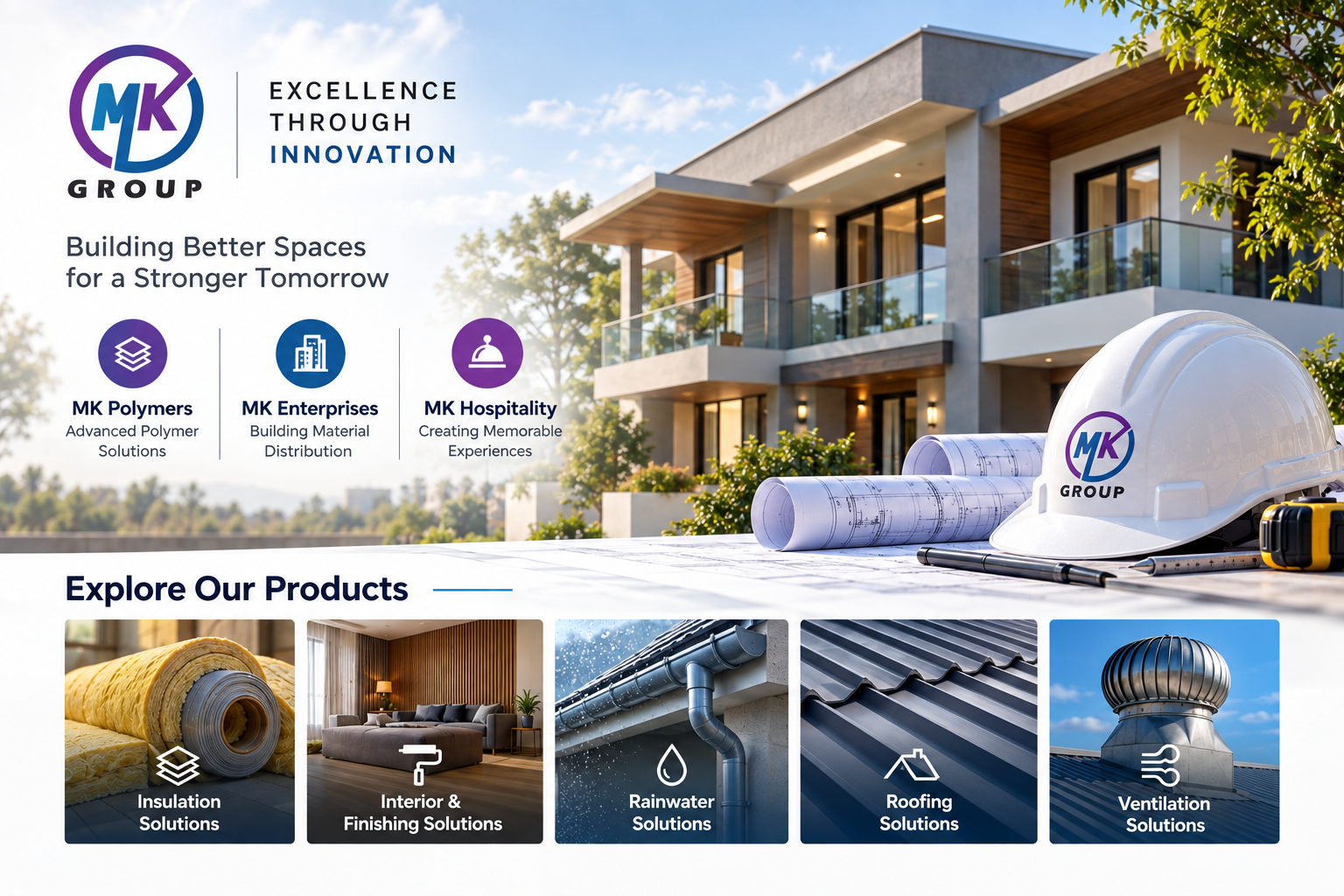
A roof should be considered as part of the overall building envelope. Depending on the application, polycarbonate roofing can be combined with suitable insulation, rainwater management and ventilation systems.
Explore
MK Group’s Roofing Solutions
along with
Rainwater Solutions
and
Insulation Solutions
.
Why Choose the Right Roofing Partner?
Roofing performance depends not only on the material but also on correct product selection, structural compatibility and installation practices. Working with an experienced roofing solutions provider can help you make better decisions for the specific project.
MK Polymers, part of MK Group, offers roofing and building-related solutions for residential, commercial and industrial requirements.
Conclusion
Polycarbonate roofing sheets can be a useful option for projects that require a combination of roofing protection, lightweight construction and natural daylight. Their versatility makes them suitable for many architectural and functional applications.
Before choosing a product, evaluate the building design, environmental conditions, structural requirements and intended use. Proper consultation and installation can make a significant difference to the long-term performance of the roofing system.
Planning a roofing project in Kolhapur or Maharashtra?
Visit
MK Group Roofing Solutions
to explore available solutions.