
Rainwater Gutter Systems for Buildings: Benefits & Installation Guide
A properly designed rainwater gutter system plays an important role in managing water flowing from a building’s roof. During heavy rainfall, effective roof drainage can help direct rainwater away from walls, entrances, foundations and other vulnerable areas.
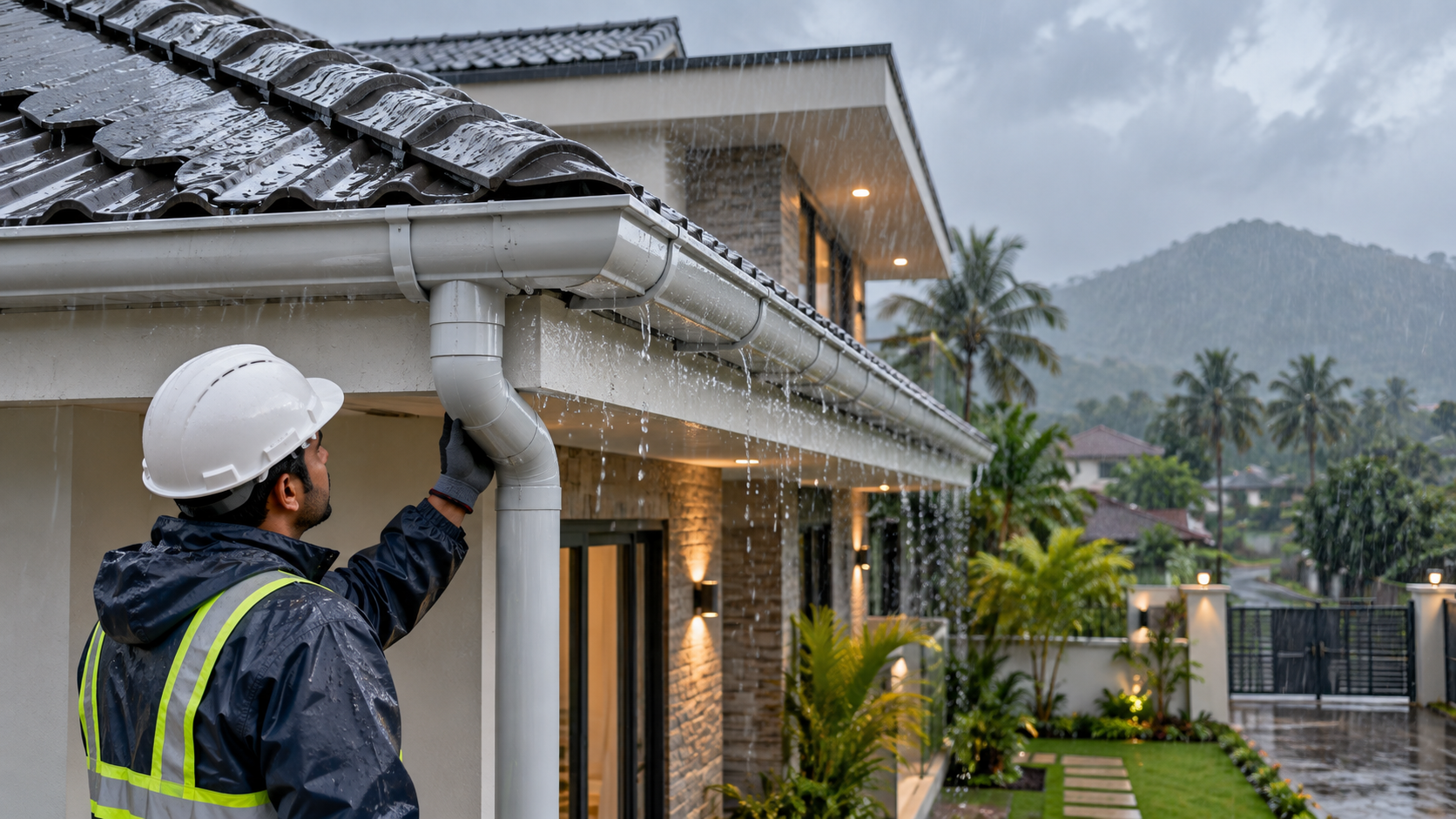
What Is a Rainwater Gutter System?
A rainwater gutter system collects water flowing from a roof and directs it towards suitable discharge points. A typical system may include gutters, downpipes, connectors, outlets, brackets and other accessories required for proper installation.
The exact design depends on the roof area, roof slope, rainfall intensity, building layout and intended discharge or collection method.
Why Are Roof Gutters Important?
1. Helps Control Roof Runoff
During rainfall, water naturally flows towards the edges of a roof. Gutters provide a controlled pathway for collecting and directing that water.
2. Helps Protect Exterior Walls
Uncontrolled roof runoff can fall directly against walls and surrounding areas. A properly designed gutter and downpipe system can help manage this flow.
3. Supports Better Drainage
Effective drainage is especially important in areas that experience seasonal heavy rainfall. A suitable gutter system can help move water away from critical parts of a building.
4. Can Support Rainwater Collection
Depending on the building design and local requirements, collected roof water can potentially be directed towards a suitable rainwater harvesting or collection system.
Where Are Rainwater Gutter Systems Used?
- Residential houses
- Commercial buildings
- Factories and warehouses
- Industrial sheds
- Schools and institutions
- Apartment buildings
- Commercial complexes
- Other large-roof structures
How to Choose the Right Rainwater Gutter System
Choosing a gutter should not be based only on appearance or price. Consider the complete drainage requirement of the building.
- Roof area: Larger roof areas generally require appropriately planned drainage capacity.
- Rainfall: Local rainfall conditions should be considered during system planning.
- Roof slope: Water flow depends on roof geometry and slope.
- Gutter size: The gutter should be appropriate for the expected water flow.
- Downpipe placement: Downpipes should be positioned to efficiently carry collected water.
- Installation: Correct slope, joints, supports and outlets are important for reliable performance.
Rainwater Management as Part of a Complete Roofing System
Roofing and rainwater management should be planned together. A complete roofing system can include the roof sheets, gutters, ventilation, insulation and other accessories required for the specific project.
Explore
MK Group’s Rainwater Solutions
and related
Roofing Solutions
.
Rainwater Gutter Solutions for Indian Buildings
Indian buildings can experience significant seasonal rainfall, making roof water management an important consideration during construction and renovation. The right gutter system should be selected according to the roof design, building size and local conditions.
MK Polymers, part of MK Group, provides roofing and building solutions designed to support residential, commercial and industrial projects.
Conclusion
A properly planned rainwater gutter system can improve roof drainage and help manage water around a building. It is an important component of a complete roofing system, particularly in regions that experience seasonal heavy rainfall.
If you are constructing a new building or upgrading an existing roof, consider rainwater drainage at the planning stage rather than treating it as an afterthought.
Looking for rainwater solutions in Kolhapur?
Explore
MK Group’s Rainwater Solutions
for your next project.